Graph-native modeling
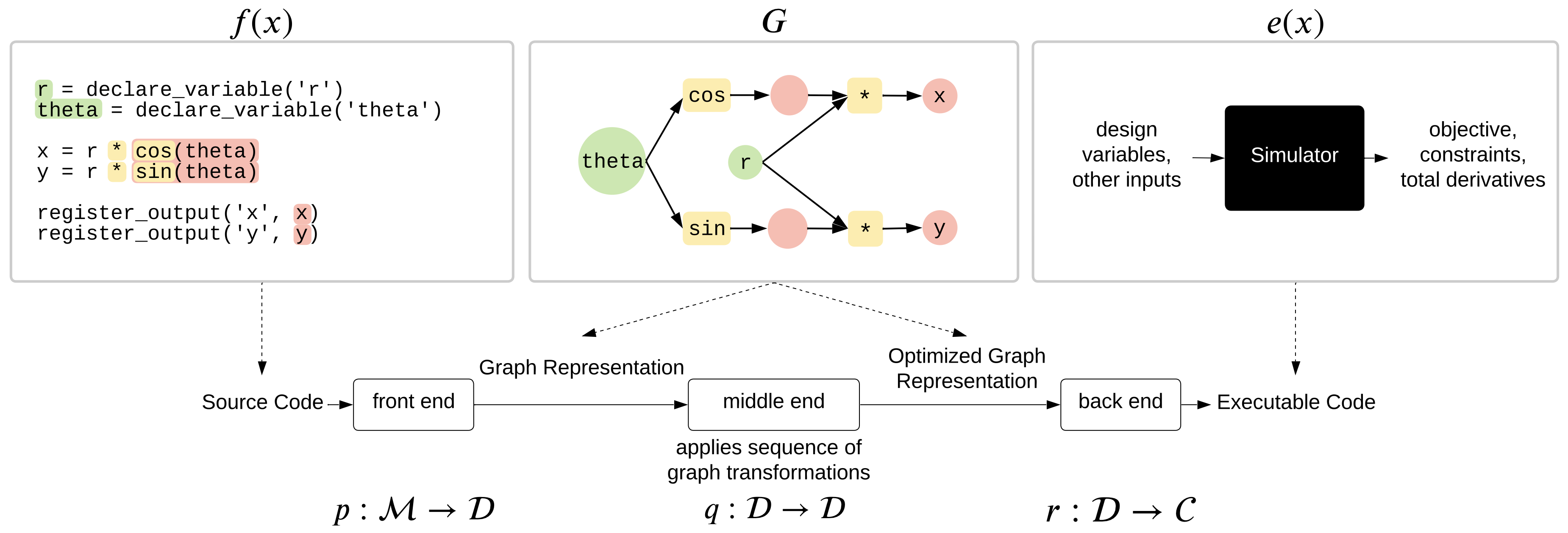
Generating model evaluations and derivatives from a common graph, with efficient execution for coupled and time-dependent physics.
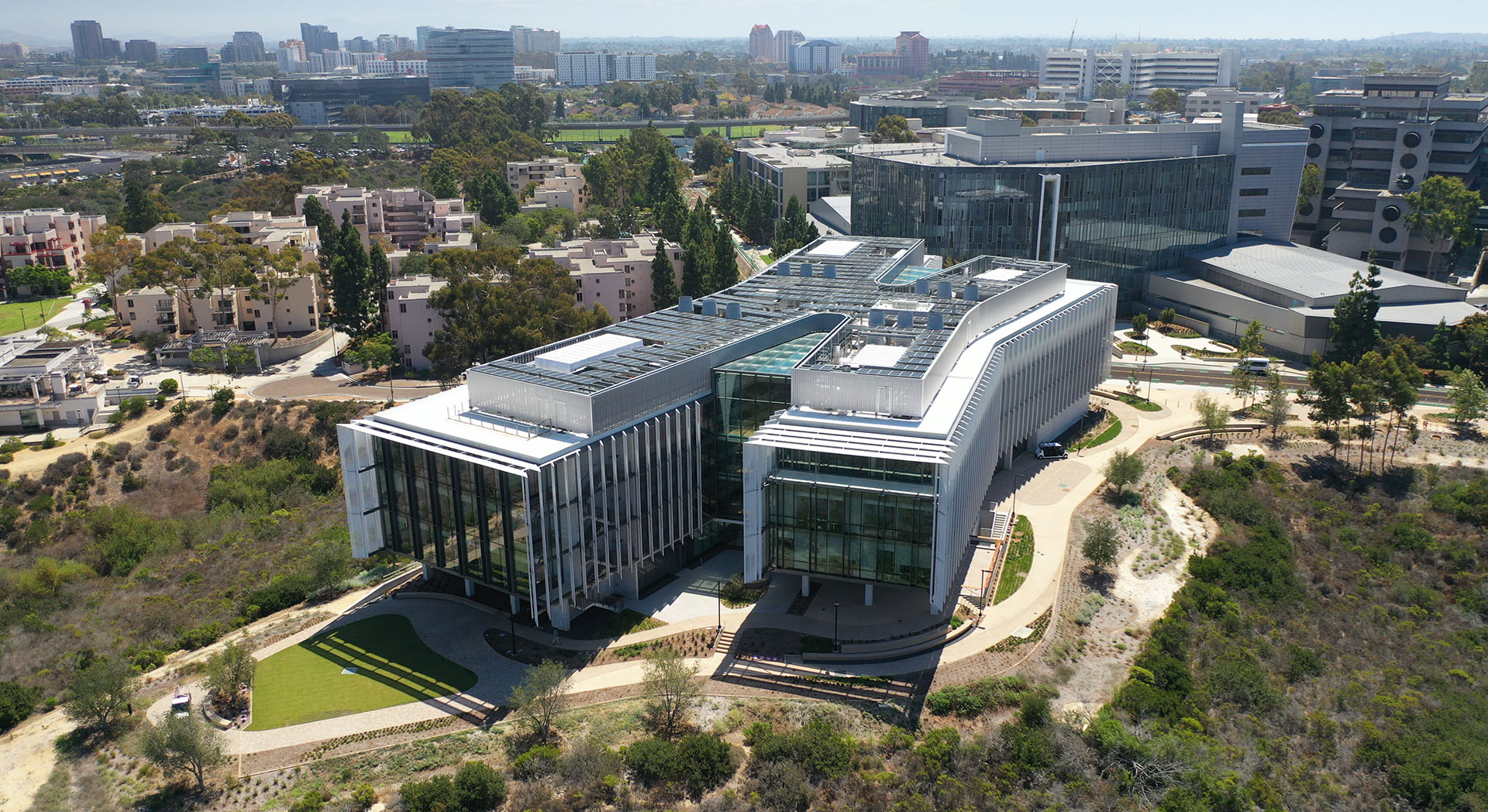
Research themes in which we develop new computational methods, theories, algorithms, and frameworks for large-scale design optimization.
Generating model evaluations and derivatives from a common graph, with efficient execution for coupled and time-dependent physics.
Differentiable potential-flow analysis with reduced memory costs for steady aircraft models and evolving aerodynamic wakes.
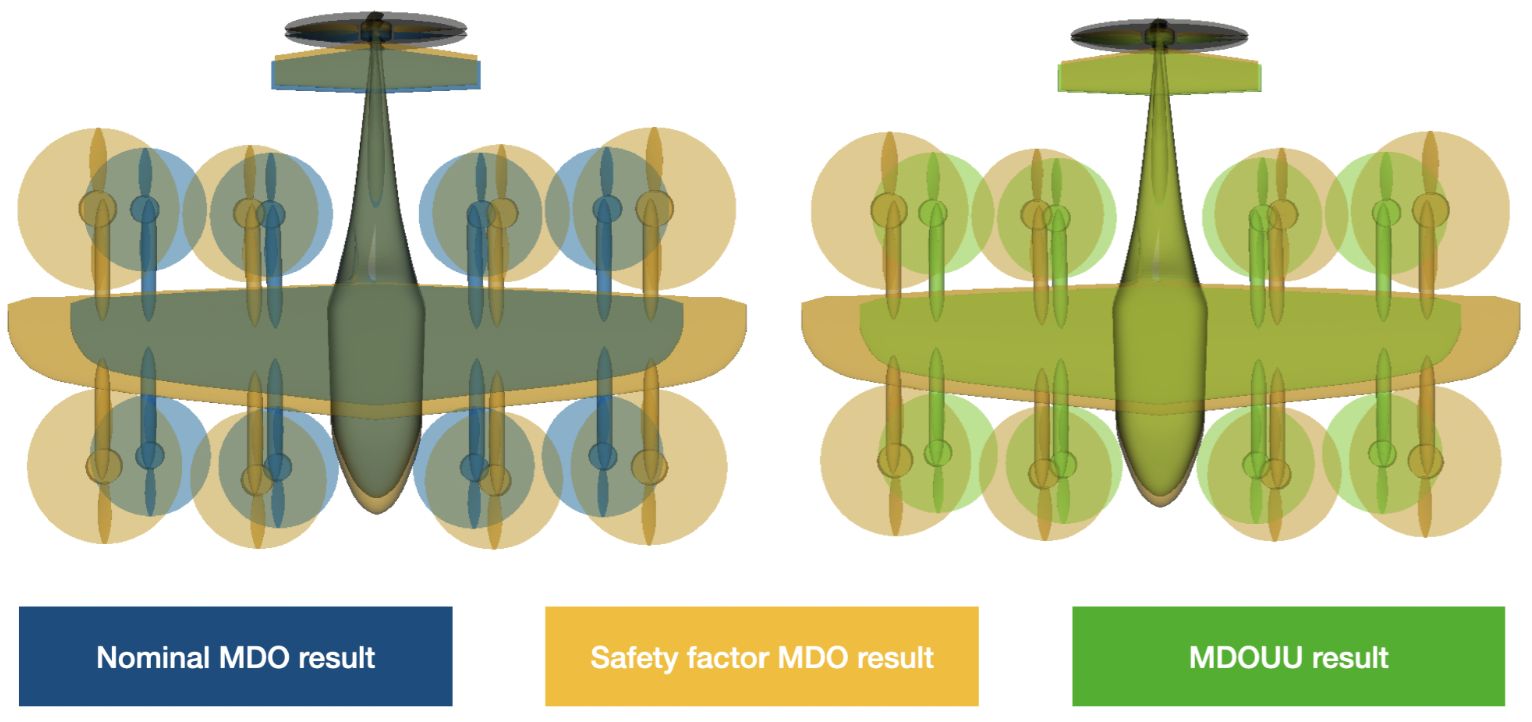
Reducing uncertainty-propagation cost through computational graph structure, response sensitivities, and dimension reduction for multidisciplinary design.
Coordinating disciplinary subproblems to manage memory, improve convergence, and satisfy shared design constraints.
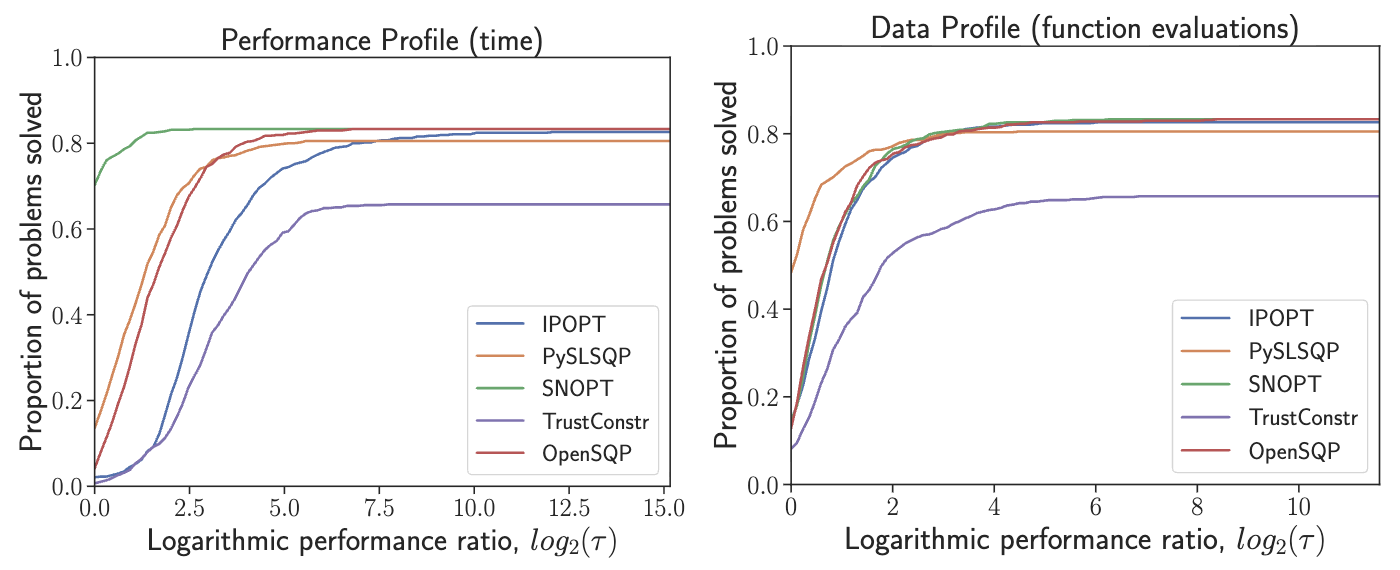
Using analysis convergence, directional curvature, and modular algorithms to improve the solution of coupled engineering design problems.
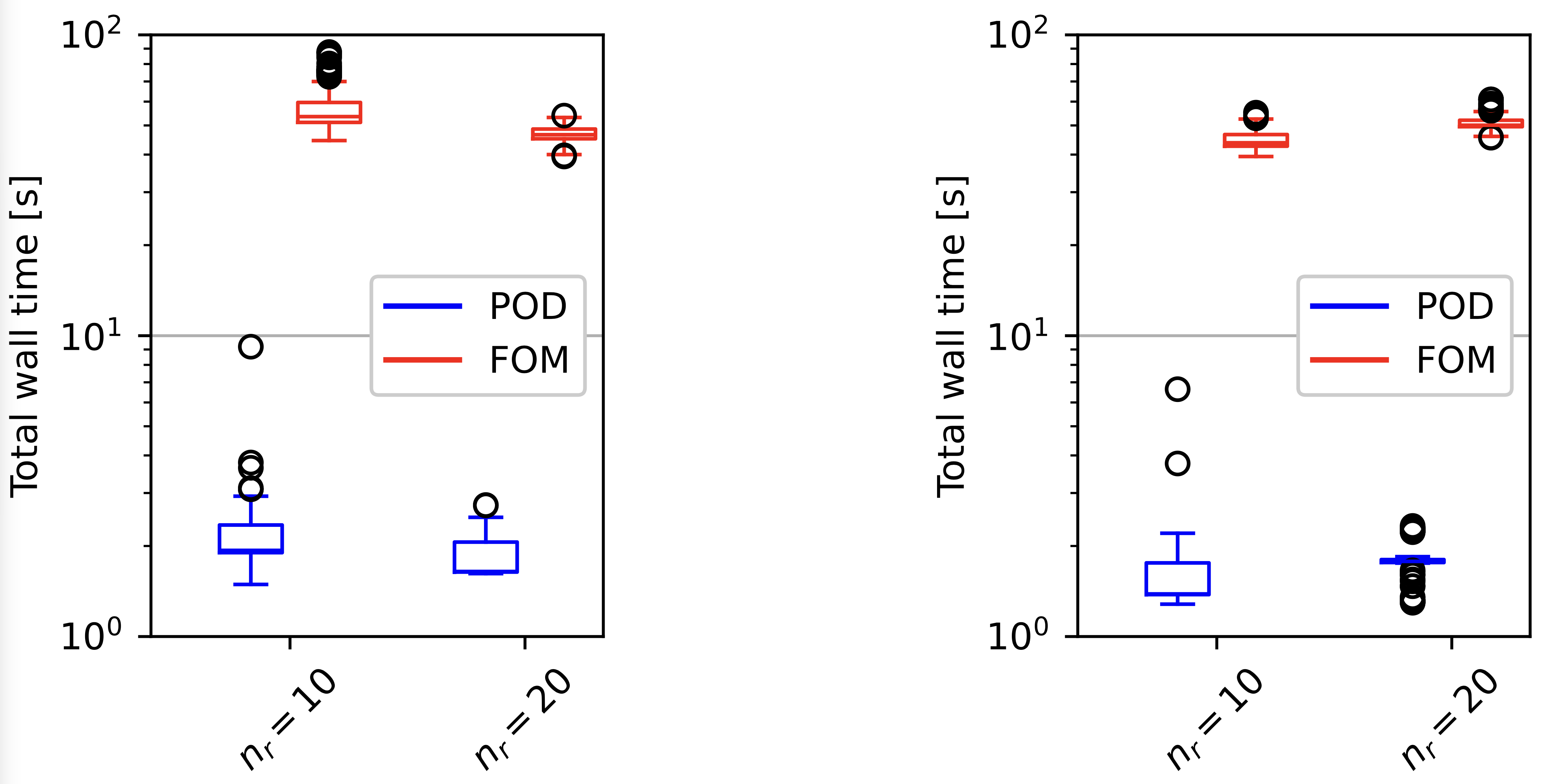
Adapting reduced simulation bases to changing designs while retaining the accuracy needed for structural and aerodynamic optimization.
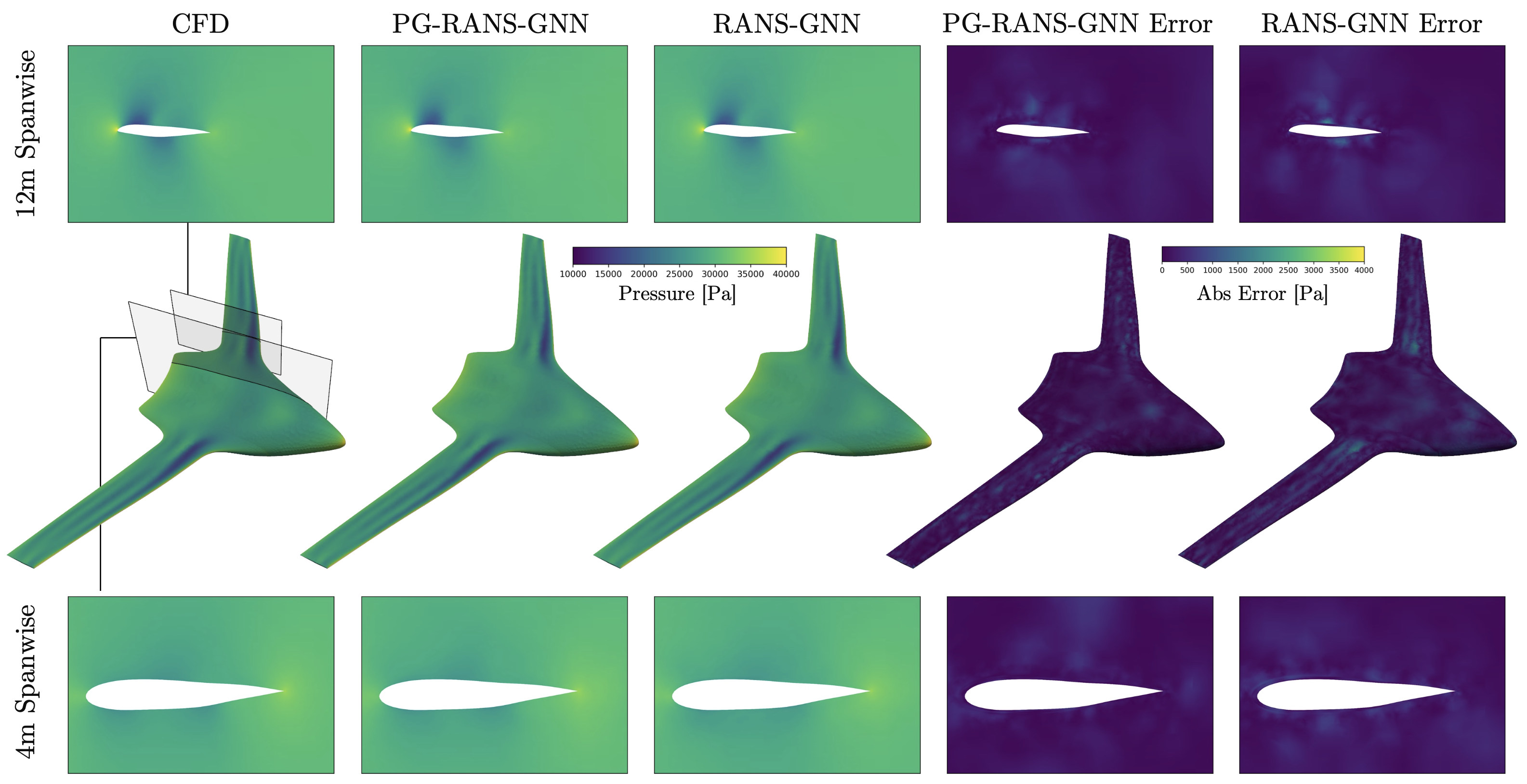
Combining physical models and sensitivity information with training data to predict spatial fields for engineering design.
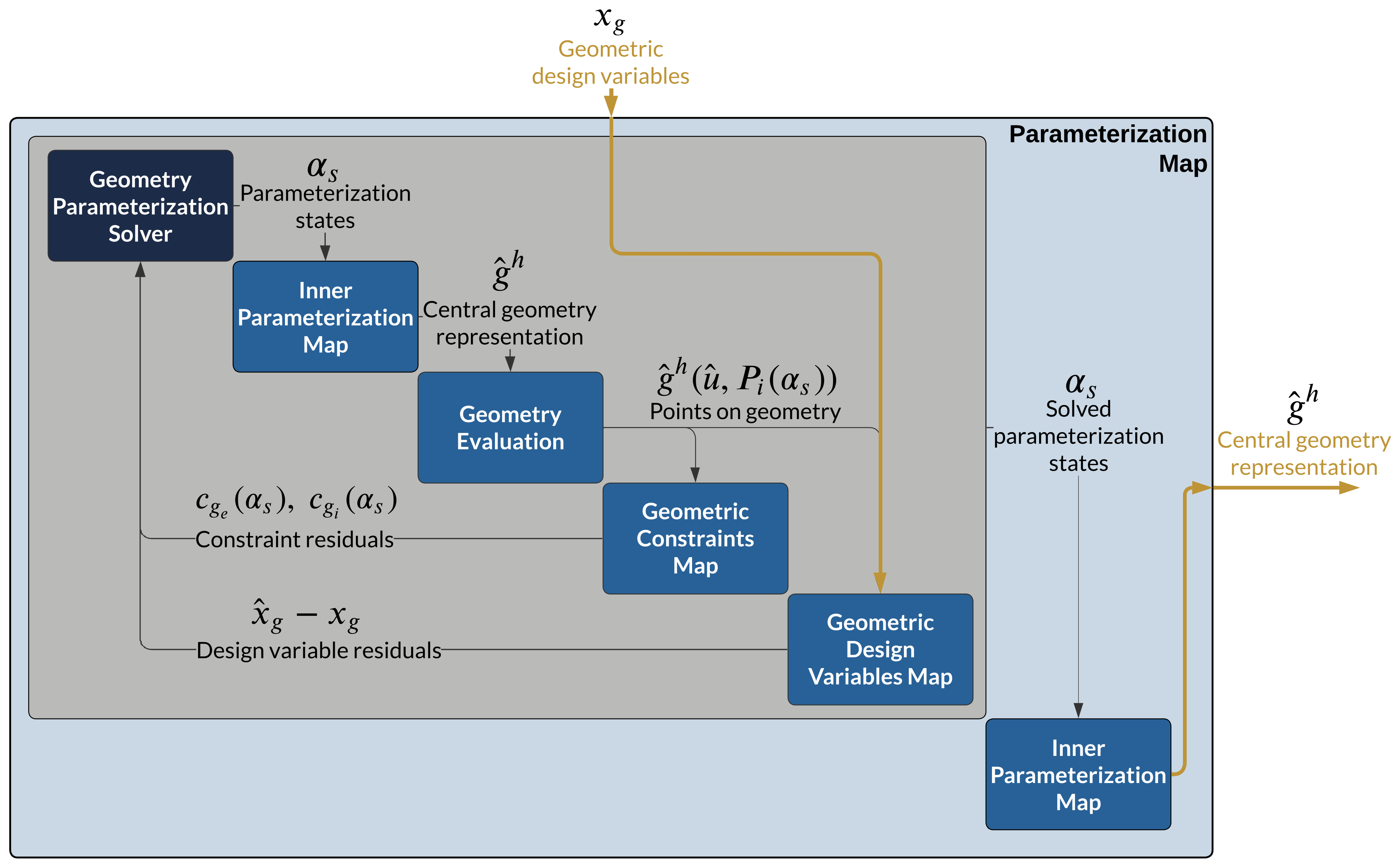
Connecting design variables to component geometry while preserving the dimensions and relationships that define a configuration.
Enforcing the component clearances needed for physically feasible configurations without impairing optimizer conditioning.
Updating aircraft analysis meshes through large shape and component-placement changes while retaining derivatives for gradient-based design.
Connecting disciplinary solvers through shared field representations and transfer operators that preserve the required physical relationships.
In development